
Africa holds 17% of the world’s forests, 65% of the world’s remaining arable land, and some of the most biodiverse ecosystems on earth. Yet for decades, this vast natural wealth has generated little income for the communities that steward it.
That is changing.
Global demand for high-quality carbon credits has surged as corporations race to meet net-zero commitments. Buyers — from airlines to tech giants — are paying $12 to $25 per tonne of verified CO₂ for credits backed by real science and transparent data. And the cheapest, most scalable place to generate those credits? Africa.
The Supply Gap Nobody Is Talking About
The voluntary carbon market is projected to grow from $2 billion today to over $50 billion by 2030. Yet Africa, which accounts for roughly 22% of global land-based carbon sequestration potential, generates less than 3% of carbon credits on the market.
This is not a supply problem. It is an access problem.
African landowners, smallholder farmers, and community forest managers have the land, the willingness, and the ecological capacity to generate millions of tonnes of verified credits every year. What they lack is the infrastructure to connect with global buyers, the technical knowledge to navigate certification requirements, and the financial tools to monetise their stewardship.
Why Now
Three forces are converging to open this window:
1. Corporate net-zero deadlines are real. The Science Based Targets initiative (SBTi) has committed over 7,000 companies to verified emissions reductions. Many of these targets fall due between 2030 and 2050, creating guaranteed long-term demand.
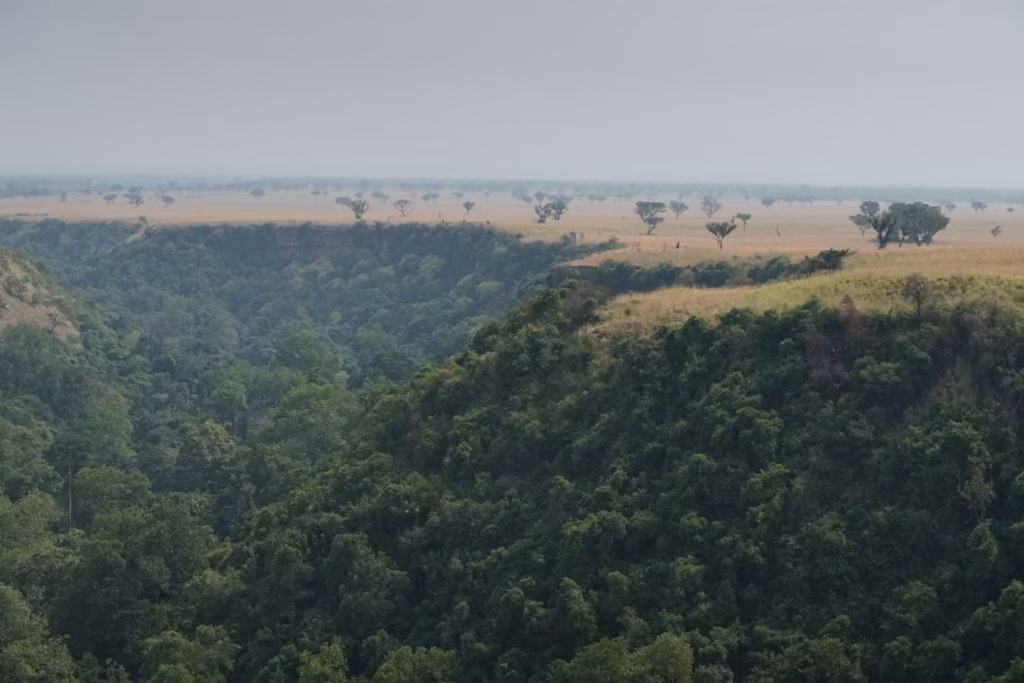
2. Africa’s forests and savannas are undervalued. Savanna grasslands — which cover 60% of sub-Saharan Africa — sequester carbon in both above-ground biomass and deep soil root systems. Recent science confirms savanna soils store two to three times more carbon per hectare than previously estimated.
3. Blockchain verification is removing the trust problem. On-chain credit issuance, satellite monitoring, and IoT soil sensors now make it possible to verify carbon sequestration in near real time — giving buyers the certainty they need and landowners the credibility they deserve.

What This Means for African Communities
For a 500-hectare land restoration project generating 10 tonnes of CO₂ sequestration per hectare per year, a verified carbon credit sale at $15 per tonne generates $75,000 annually — with zero upfront cost to the landowner.
This is not development aid. It is income for ecological work African communities were already doing for free.
The carbon credit frontier is open. Africa is positioned to lead it.